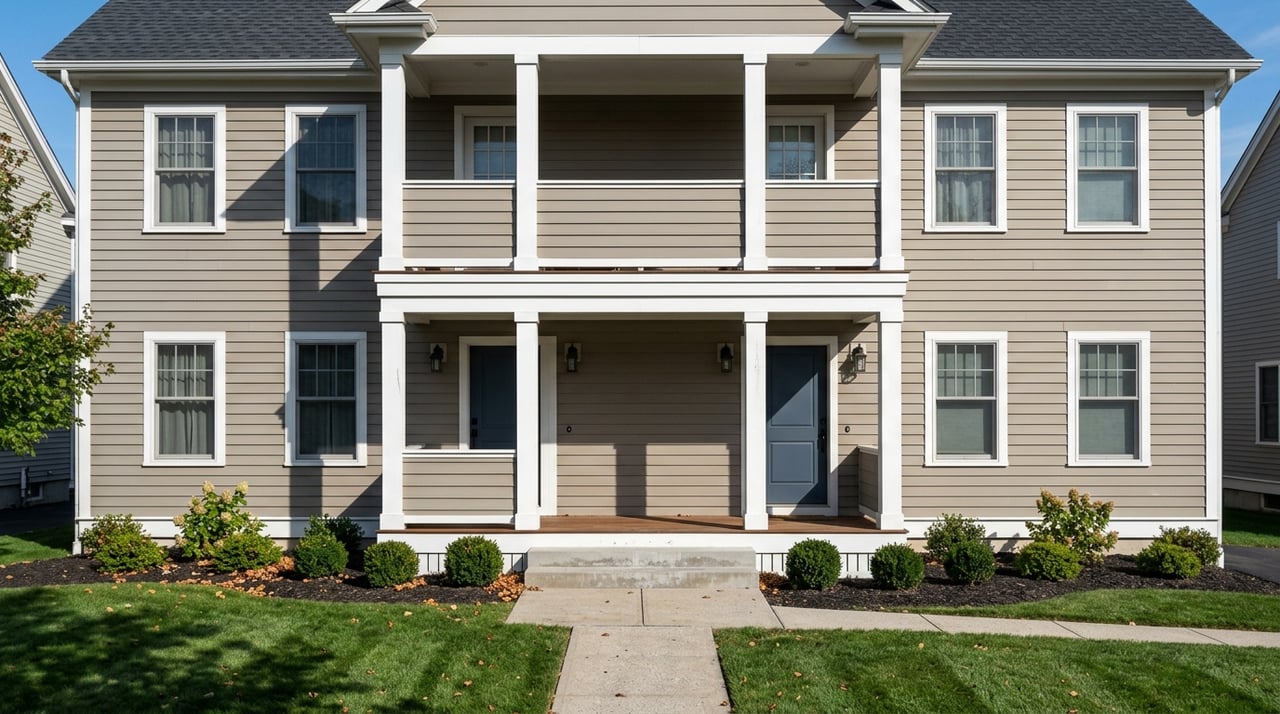
Your Guide to Buying Multi-Family Property in Nashua
June 11, 2026
June 11, 2026
Thinking about buying a multi-family property in Nashua? You are looking at a market where rental housing already plays a major role, and that can create real opportunity if you buy with clear numbers and realistic expectations. Whether you want to live in one unit and rent the others or add a small investment property to your portfolio, understanding Nashua’s rents, taxes, housing stock, and due diligence steps can help you make a smarter move. Let’s dive in.
Nashua has a large existing multi-family housing base, which makes it one of the more relevant places in Southern New Hampshire to shop for duplexes, triplexes, and larger residential income properties. According to the 2023 New Hampshire housing supply report, the city has 39,663 total housing units, including 5,098 two-family homes, 2,522 three- to four-family buildings, and 13,037 properties with five or more units.
That means about 20,657 of Nashua’s housing units are multi-family, or roughly 52.1% of the city’s total housing stock. For you as a buyer, that matters because it shows this is not a niche corner of the market. Multi-family housing is a meaningful part of how Nashua lives and grows.
Nashua is also a sizable city with a 2024 population estimate of 91,851. Census data shows a 55.8% owner-occupied rate, a median owner-occupied home value of $403,900, and a median gross rent of $1,737. Those numbers help frame Nashua as a city with both active ownership and strong demand for rental housing.
Speed and pricing matter when you shop for multi-family property, especially in a market with limited supply. Zillow reported an average Nashua home value of $507,692 and a March 2026 median sale price of $470,833, with homes going pending in about 7 days.
For buyers focused specifically on duplexes and similar properties, inventory can feel tight. Zillow’s Nashua duplex and triplex results showed 11 active listings, with visible asking prices ranging from $480,000 to $1.45 million. That range tells you two things: entry points exist, but pricing can climb quickly depending on unit count, condition, and location within the city.
If you are planning to buy, it helps to prepare early with your financing, must-have list, and repair budget. In a fast-moving market, hesitation can cost you a property, but overreaching can cost you later if the numbers do not hold up.
One reason buyers look closely at Nashua multi-family properties is the local rent picture. New Hampshire Housing’s 2024 Residential Rental Cost Survey reported a citywide median gross rent of $2,306 for a two-bedroom unit and $2,302 across all bedroom sizes in Nashua.
That is notably higher than the broader Nashua HMFA two-bedroom median of $1,999. It is also above Hillsborough County’s 2024 medians of $1,551 for a two-bedroom and $1,525 for all bedrooms. Based on those official survey figures, Nashua sits at the higher-priced end of the county rental market.
Demand also appears tight. New Hampshire Housing said the 2023 rental survey remained the latest official vacancy benchmark and reported vacancy staying well under 1% for two-bedroom units and for all units in most counties, while describing a balanced market as roughly 5% vacancy.
For you, this supports the idea that rental demand has remained strong. It does not guarantee any specific return on a specific property, but it does explain why well-located, well-maintained multi-family homes in Nashua can attract serious buyer interest.
High rents can make a multi-family purchase look attractive on paper. Still, your real decision should come from careful underwriting, not just top-line rent.
A sound local underwriting approach starts with expected gross rent and then subtracts vacancy, property taxes, insurance, utilities, repairs, capital reserves, and any management costs. In Nashua, that discipline matters because local rent strength can be offset quickly if expenses are higher than expected.
Property taxes are a good example. Nashua’s 2025 tax rate is $16.83 per $1,000 of assessed value, up from $15.90 in 2024. July tax bills are due on the first business day in July, and December bills are usually due in December, with late bills accruing 8% interest after the due date.
If you plan to owner-occupy one unit, the rent from another unit may offset a meaningful share of your carrying costs. Even so, you still want room in your budget for turnover, repairs, and the occasional surprise that comes with older buildings.
Nashua multi-family properties can work for more than one type of buyer. If you want to live in one unit, a duplex or triplex may give you a path to ownership with rental income helping to support the monthly payment.
If you are a small investor or landlord, the appeal is different. You may be focused on local rent levels, low vacancy pressure, and the chance to buy in a city where multi-family housing is already a major part of the market.
In both cases, the key is to buy based on present numbers and realistic expenses, not best-case projections. A property can look promising at first glance but still fail your goals if deferred maintenance, utility setup, or tax costs are heavier than expected.
Multi-family due diligence goes beyond the basics of a typical single-family purchase. You are not only buying a building. You are also evaluating income, expenses, legal use, and operational risk.
Start with the property’s legal and financial setup:
Then look closely at the physical systems that can most affect future costs:
These checks are especially important in older Nashua multi-family buildings, where rising taxes and utility costs can narrow your margin faster than expected. A property with solid rents but weak systems can become expensive very quickly.
Many multi-family properties in Nashua were built decades ago, so age matters during your review. If the building was built before 1978, ask about lead-safe status and whether the property has participated in New Hampshire Housing lead-related programs.
New Hampshire Housing notes that lead is a toxic metal found in many pre-1978 homes. It also points to a Nashua-specific Urban Programs intake contact for lead work, which can be useful if you are evaluating repairs or future compliance needs.
This does not mean every older property is a problem. It means you should ask direct questions early so you understand the condition of the building and the work that may be needed.
If you are buying a multi-family property, it helps to understand a few New Hampshire landlord-tenant rules before closing. These details can affect how you plan for management, tenant communication, and transition after the sale.
Under New Hampshire law, an owner of restricted residential property who lives outside the state must file an in-state agent for service of process with the city or town clerk within 30 days. For residential tenancies, 30 days’ notice is generally sufficient, while 7 days’ notice applies to certain statutory grounds.
There is also a payment rule that matters for lease setup. As of January 1, 2026, a landlord may not require all lease payments to be made only through electronic funds transfer, and at least one non-electronic payment method must be allowed.
These may sound like small details, but they can matter during closing, tenant turnover, and post-closing planning. If you are buying an occupied property, timelines and notice rules deserve close attention.
If you are considering an older owner-occupied multi-family property, local rehab support may be worth exploring. Nashua’s Housing Improvement Program offers loans up to $40,000 for a single-family home, or $40,000 plus $5,000 for each additional unit in a multi-unit building.
For the right buyer, that could make a difference when a duplex or triplex needs repairs after purchase. New Hampshire Housing also offers lead and healthy homes resources that can help point buyers and property owners toward state and local contacts for health-and-safety work.
Programs have their own requirements, so you will want to confirm current eligibility and timing as part of your planning. Still, knowing these resources exist can open up options when a property has good long-term potential but needs work today.
The strongest multi-family purchases in Nashua usually come from steady, practical decision-making. You want to match your budget to the property’s likely performance, not just its listing appeal.
A smart approach often looks like this:
In a city like Nashua, opportunity is real, but so is competition. Buying well usually comes down to local knowledge, disciplined numbers, and a clear understanding of what you are taking on.
If you are weighing a duplex, triplex, or other multi-family property in Nashua, working with a local team can help you compare options, spot red flags, and move with confidence. To talk through your goals and the current market, connect with Pat Clancey Realty.
Stay up to date on the latest real estate trends.
We pride ourselves in providing personalized solutions that bring our clients closer to their dream properties and enhance their long-term wealth.