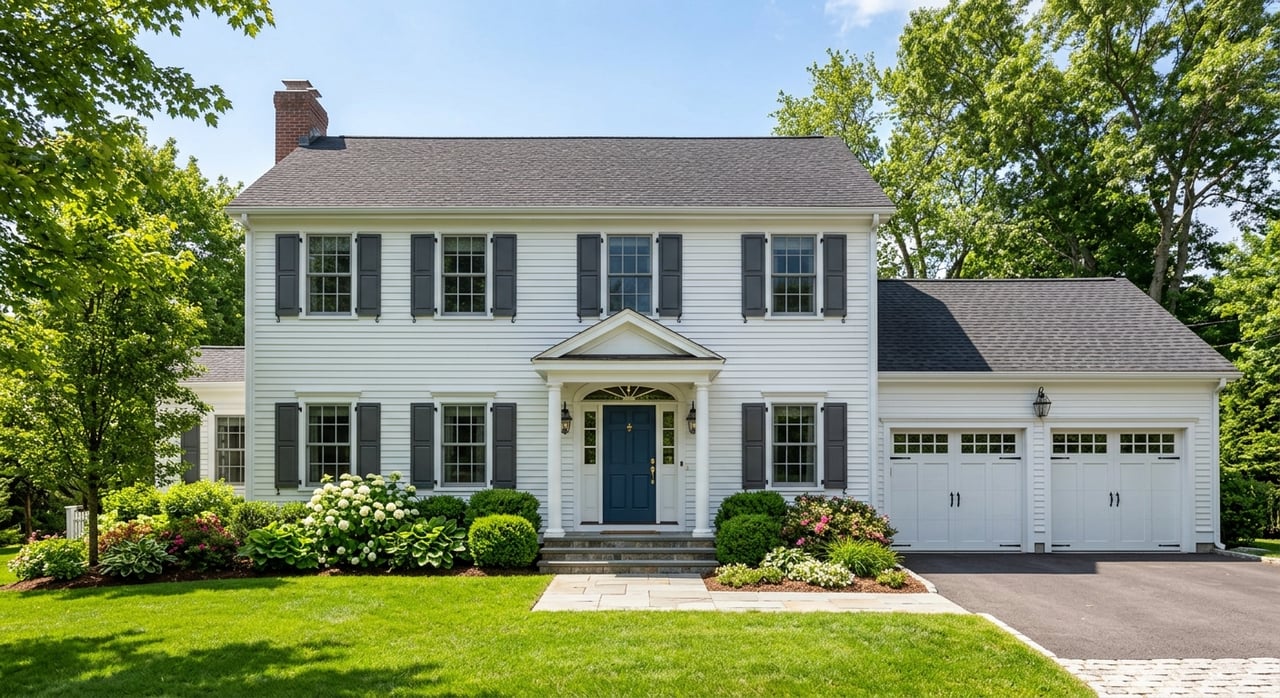
Hudson vs Nashua vs Londonderry: Which Town Fits Best?
July 9, 2026
July 9, 2026
Trying to choose between Hudson, Nashua, and Londonderry? If you are shopping for a home in Southern New Hampshire, these three markets can look similar at first glance, but they live very differently day to day. The right fit depends on how much housing variety you want, what kind of commute you can handle, and whether you prefer a more urban or more suburban feel. Here’s a practical look at how Hudson, Nashua, and Londonderry compare so you can narrow your search with more confidence. Let’s dive in.
If you want the short version, the pattern is pretty clear. Nashua offers the most housing variety and the strongest transit and downtown amenities. Hudson sits in the middle with a mostly suburban feel, solid owner-occupancy, and more moderate pricing directionally. Londonderry is the most suburban of the three, with larger-lot character, strong highway access, and more price pressure.
That does not mean one town is better than another. It means each one tends to serve a different kind of buyer goal. If you start with your daily routine and your housing priorities, the choice often becomes much easier.
Nashua has the broadest housing mix in this comparison. City data shows about 45% of the housing stock is one-unit detached homes, 5% is one-unit attached, 15% is in 2-to-4-unit properties, 15% is in 5-to-19-unit buildings, 17% is in 20+ unit buildings, and 3% is mobile homes.
For buyers, that means more paths into the market. If you are looking at single-family homes, condos, attached homes, or multi-unit properties, Nashua gives you the widest spread of inventory types and living styles.
Hudson is still largely a single-family market. About 81% of the housing stock is single-family, 17% is multifamily, and 2% is manufactured housing, with about 80% of occupied units owner-occupied.
Recent construction from 2020 through 2023 leaned toward single-family detached homes and duplexes. That suggests Hudson is adding some variety, but it still reads as a primarily suburban, owner-occupied market.
Londonderry is also strongly owner-occupied, with the town reporting that 83% of households own their homes. Its housing stock is dominated by 69% single-family detached homes and 13% single-family attached homes, while buildings with five or more units make up only 12%.
For many buyers, that supports the larger-lot suburban feel Londonderry is known for. It also means your choices may be narrower if you want more compact housing types or a broader range of price entry points.
Hudson’s 2025 master plan places the median home price at about $350,000, with median market-rate rent around $1,550. Used directionally, that makes Hudson the middle option in this three-town comparison.
For buyers who want a mostly single-family environment without moving into the highest price pressure of the group, Hudson may feel like a practical compromise. You still need to watch current listing activity closely, but the town’s pricing profile appears more moderate than Londonderry’s.
Nashua’s latest city-plan table shows a 2020 median home value of $279,800 and a 2020 median contract rent of $1,197. At the same time, the city plan notes that the Nashua region had less than 1% rental vacancy, and Hillsborough County’s 2023 median two-bedroom rent was $2,008.
That gap tells you something important. Older benchmark figures do not fully capture how tight the more current market has become, so while Nashua may offer more housing types, buyers should still expect affordability pressure and changing conditions.
Londonderry’s price story stands out. A secondary ACS-based estimate places median home value around $464,100, and the town’s master plan says median purchase price has risen 43% faster than inflation since 2015.
The town’s land-use rules also help explain that pressure. The AR-I district covers more than 75% of town land, and where public water or sewer is not available, minimum lot size must be at least one acre. In simple terms, supply is more constrained, which can keep pressure on prices.
If transportation flexibility matters to you, Nashua leads this group. The Nashua Transit System provides fixed-route bus service and demand-response service, covers more than 350 bus stops, and connects routes across the city and nearby communities.
The city’s latest Consolidated Plan says 65% of workers had travel times under 30 minutes. If you want the best shot at combining housing search with transit access, downtown activity, and shorter in-city trips, Nashua is the clearest fit.
Hudson remains heavily car-oriented. The town reports that 82.4% of workers drove alone in 2021, 10.4% worked at home, and the mean travel time to work was 31.6 minutes.
Hudson’s location still works well for many regional commuters. The transportation plan says 29% of residents commute within Hudson or to Nashua, while 35% travel to Massachusetts for work, which helps explain heavy use of NH 3A, NH 102, and other arterial roads.
Londonderry is also car-oriented, but it has strong regional access. The town says 72.7% of residents drive alone to work, 19.2% work from home, public transit use is 0.6%, and the mean commute time is 29.1 minutes.
A practical advantage is the North Londonderry bus depot at I-93 Exit 5, which offers inter-city bus connections to Boston, Logan Airport, Salem, Nashua, Concord, and other destinations. If your routine depends more on highway and regional access than local transit, Londonderry may stand out.
Hudson’s official community information highlights open space and recreation. Residents have access to places like Benson Park trails and walking paths, Robinson Pond, two golf courses, sports fields, and Rodgers Memorial Library.
That mix supports a quieter, residential feel. If you want a town where daily life leans more toward neighborhood routines, recreation, and a suburban setting, Hudson fits that profile well.
Nashua has the most urban and amenity-rich feel of the three. The city describes downtown as a classic New England center with shops, restaurants, retail, residential uses, municipal services, and professional offices in one area.
The city also highlights Mine Falls Park, along with a stronger blend of walkability, events, and bus access. For buyers who want more activity, convenience, and mixed-use surroundings, Nashua offers the broadest everyday experience.
Londonderry’s amenities are more dispersed. The Leach Library sits in the town center near town offices, and the recreation department supports programs, fields, and trail resources tied into the community complex.
The town’s master plan also emphasizes the importance of Route 102, Route 28, I-93, and Manchester-Boston Regional Airport to its commercial and employment geography. That gives Londonderry a more spread-out suburban pattern with strong regional connections.
Hudson may be the best fit if you want a mostly single-family suburban market, a directionally more moderate price anchor than Londonderry, and convenient access to Nashua and regional highways.
It works especially well for buyers who want suburban character but still want more housing variety than a more land-constrained market may offer.
Nashua may be the best fit if you want the broadest range of housing types, stronger transit options, and a more walkable, amenity-rich environment.
It can also make sense if you want to compare condos, single-family homes, attached properties, or multi-unit options in one market. Just be prepared for tighter conditions and affordability pressure.
Londonderry may be the best fit if you prioritize larger-lot suburban living, owner-occupied character, and strong access to I-93 and the airport corridor.
It is a solid match for buyers who know they want that setting and are prepared for a market with less housing variety and stronger price pressure.
When buyers get stuck, it is usually because they are comparing towns by name instead of by lifestyle. A better method is to rank what matters most to you, such as housing type, commute pattern, price range, and how you want errands and weekends to feel.
Once you do that, the differences become clearer. Nashua is the variety-and-convenience choice, Hudson is the balanced middle choice, and Londonderry is the more space-oriented suburban choice with tighter supply conditions.
If you are weighing these towns right now, a local side-by-side search can save you time and help you focus on the markets that truly fit your goals. Pat Clancey Realty offers practical, hands-on guidance for buyers across Nashua and surrounding Southern New Hampshire communities.
Stay up to date on the latest real estate trends.

We pride ourselves in providing personalized solutions that bring our clients closer to their dream properties and enhance their long-term wealth.