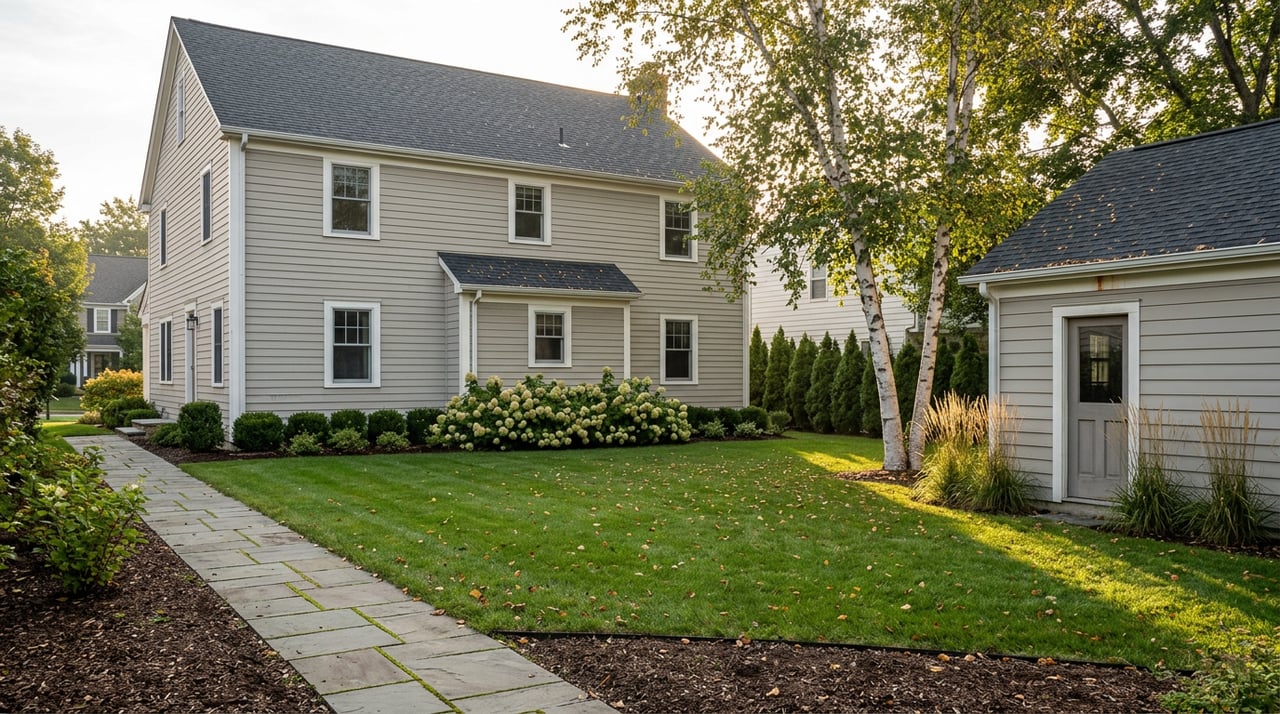
Nashua NH ADU Rules: Understanding the Owner-Occupancy Covenant
September 24, 2026
September 24, 2026
If you have looked into building an accessory dwelling unit in Nashua this year, you have probably read some version of the same headline: Nashua InkLink News reports that the state legalized ADUs by right, the zoning board can no longer stand in your way, and homeowners across New Hampshire are finally free to add a rental unit in the backyard. All of that is true. None of it is the part that determines whether the project actually works for you.
Nashua's code requires filing a covenant with the Hillsborough County Registry of Deeds before Nashua's Building Safety office will issue you a permit. The document must state that your property contains an accessory dwelling unit and that you, the owner, will occupy either the primary home or the ADU as your principal residence. That single requirement is why an ADU in Nashua behaves less like a rental-income tool for an investor and more like a housing arrangement for someone who is staying put.
The legal groundwork here has moved twice in under a year. Here is the sequence.
| Date | What happened | What it changed |
|---|---|---|
| 2016 | State law (RSA 674:71-73) required towns to allow at least one ADU, but left towns room to require a special exception | Nashua allowed attached ADUs, capped at 750 square feet, only through a zoning board process |
| July 1, 2025 | New Hampshire's HB 577 took effect | Detached ADUs became legal by right statewide, with no zoning board hearing required |
| December 2025 | Nashua's Board of Aldermen passed ordinance O-25-076 to bring city code in line with state law | Nashua's own size cap rose from 750 square feet to 980 square feet for new construction, and up to 1,200 square feet if the unit is built inside an existing structure |
| July 2026 | State lawmakers followed up with HB 1079 | The law added further support for converting existing detached structures, garages, barns, carriage houses, into ADUs |
For project sizing, rely on the current code rather than the old 750-square-foot cap. The current limits, confirmed in the city's own land use code, are 980 square feet for a new structure and 1,200 square feet if you are converting space inside something that already exists, like a garage or a walk-out basement.
Nashua's code requires an ADU to be:
"clearly incidental and subordinate in extent, use, and purpose to the primary structure"
The code also requires the property owner to occupy either the primary home or the accessory unit as a principal residence, with a covenant recorded at the county registry before a building permit is issued. That covenant is not a formality you sign and forget.
This is the detail that separates an ADU from a duplex, even though a Nashua ADU can look and rent exactly like one half of a two-family home. A small investor who wants to buy a single-family lot, add a detached unit, and rent both structures out for pure cash flow cannot do that under Nashua's current rule. Someone has to live there. That makes the ADU a strong fit for a homeowner who wants rental income to offset a mortgage, a family housing an aging parent or an adult child, or someone planning to age in place with a caregiver next door. It is a weaker fit for an out-of-state or portfolio investor who was hoping to treat it like an accessory rental property with no residency string attached.
Nashua's home values were running around $298 per square foot in September 2026, which gives you a sense of what raw square footage is worth on the resale side of the ledger. On the rental side, one-bedroom units in the city have generally been renting in the $1,700 to $2,000 a month range in 2026, with a well-finished ADU landing in a similar band depending on size and finish quality.
Construction cost is where the two paths to an ADU diverge sharply. Converting an existing garage or basement into a legal unit typically runs $80,000 to $150,000, largely because you are working with a structure and foundation that already exist. A new detached unit built from scratch runs closer to $150,000 to $300,000 or more once you account for a new foundation, utility connections, and site work.
Run the conversion math on a garage: spend roughly $120,000 turning it into a legal ADU, rent it at $1,900 a month, and you are looking at about $22,800 a year in gross rent, a return in the high teens against the build cost. A new detached unit costing $220,000 and renting at $2,000 a month pencils closer to 11 percent gross. Both numbers ignore financing costs, vacancy, and maintenance, but they explain why the July 2026 push toward easier conversions of existing structures matters more in a city like Nashua than it might elsewhere. A lot of Nashua's older housing stock, particularly in the North End and around the historic district, already comes with a detached garage or carriage house sitting on the lot. Converting one of those is a materially different project than pouring a new foundation.
Before you call a contractor, confirm these items, because they are where ADU permits stall:
None of these are deal breakers. They are simply the paperwork that has to happen in the right order, and skipping the covenant step is the single most common reason an otherwise straightforward ADU project gets delayed.
Can I rent out both the main house and the ADU and live somewhere else? No. Nashua's ordinance requires the property owner to occupy either the primary dwelling or the accessory unit as a principal residence. The covenant filed at the county registry documents this and stays with the property.
Does the ADU need its own septic system? Not necessarily its own system, but the property has to provide adequate water supply and sewage disposal for the added unit under state law. If you are on septic rather than city sewer, this is worth confirming with the city's Building Safety office before you finalize plans.
What should I know if I sell my Nashua home with an ADU? The covenant is recorded at the county registry. If you are selling a property with an existing ADU, keep its documentation in view as you prepare for the closing.
Adding an ADU in Nashua is a real option for the right kind of owner, but the paperwork determines who that owner actually is. If you are weighing whether a Nashua property with ADU potential makes sense for your situation, whether you are trying to house family, offset a mortgage, or figure out what the recorded covenant means for your plans, Pat Clancey Realty can walk through the numbers with you and help you figure out what your specific lot and budget can actually support. Work With Us — Get a Local Market Consultation.
This article is general information, not legal, tax or financial advice. Consult a qualified professional about your situation.
Stay up to date on the latest real estate trends.
We pride ourselves in providing personalized solutions that bring our clients closer to their dream properties and enhance their long-term wealth.