Merrimack's Brewery Closed. Its Sewer Plant Lost More Than a Customer.
November 12, 2026
November 12, 2026
For decades, Anheuser-Busch used magnesium hydroxide in large quantities at its Merrimack brewery, and the leftover chemistry flowed down the line to the town's wastewater plant on Mast Road. There it did a job nobody had to pay for. It kept the plant's treated water within the pH range its federal discharge permit requires. As the brewery wound down toward its January 2026 closure, that free alkalinity went away. The plant has violated the permit several times since September 2025.
The brewery's departure became a story about jobs, a landmark, and a 300-acre site along the Merrimack River changing hands. For anyone buying a home in Merrimack, it is mostly a story about sewer bills.
Merrimack's sewer fund runs on user fees. At a January 14, 2026 budget review, Town Manager Paul Micali told the Town Council that no tax dollars go into the sewer fund. It is all user-based fees. According to the town's Merrimack Development Guide, residents' sewer fees are billed twice a year on the property tax bill.
So a home connected to town sewer pays two separate charges on the same statement. One follows assessed value and the tax rate. The other follows the cost of running the treatment plant. When a buyer compares a sewered colonial with a septic house a mile away, the tax figure on each listing may not be measuring the same thing. The sewer side of that bill is the part now under pressure.
Anheuser-Busch paid Merrimack about $1 million to $1.5 million a year toward the sewage budget, Micali told New England Public Media on December 11, 2025, the day the closure was announced. He said the town had changed its wastewater operations to handle the volume of liquid coming from the plant. NH Business Review later called the brewery one of Merrimack's largest municipal wastewater utility users, at that same $1 million to $1.5 million a year in fees. By September 2026, the site had been vacant for eight months after the brewery closed in January.
Those fees are only half of it. The rest is chemistry, which Assistant Public Works Director Leo Gaudette laid out for the Town Council on August 20, 2026. The plant uses nitrification to turn ammonia into nitrogen gas, and that process pushes pH down. Its discharge permit requires effluent between 6.5 and 8, and the minutes note the Merrimack River is already considered impaired for pH. The EPA authorization covering the plant at 36 Mast Road took effect April 1, 2026, and it carries the same 6.5 to 8 range.
| What the plant needs | With the brewery | Without the brewery |
|---|---|---|
| About $1 million a year in user revenue | Paid by Anheuser-Busch | Covered from the wastewater enterprise fund balance for the current budget |
| Alkalinity to hold effluent pH at 6.5 to 8 | Supplied by the brewery's magnesium hydroxide | Purchased sodium bicarbonate and sodium hydroxide |
| Equipment to dose those chemicals | Not needed | Up to $250,000 approved August 20, 2026 |
"Anheuser-Busch used to provide a significant alkalinity and pH adjustment due to their magnesium hydroxide use in their process," Gaudette said, according to a report on the meeting published on Yahoo News. "We now have to add sodium bicarbonate and sodium hydroxide to maintain our effluent pH to meet our NPDES permit, because AB is now gone." The same report says the plant had violated its permit several times since September 2025. Staff fell back on existing pumps and a dry feeder to stay in compliance, which Gaudette described as a stopgap that could not be made permanent.
The approved project includes a 1,600-gallon sodium hydroxide storage tank, feed pumps, and a larger dry feeder in its own shed. All of it ties into the plant's SCADA monitoring system so pH can be read in real time and the chemical dose tuned to avoid wasting what the minutes call "expensive chemicals." Plant staff will do most of the installation. The Council approved it 6-0, paid from the Sewer Infrastructure Capital Reserve Fund.
In January, the town didn't know what would replace the brewery. Micali told the Council the town would keep the wastewater budget as it was and use part of the enterprise fund's balance to cover the shortfall. That would leave time to weigh options starting in July and adjust in the following budget cycle. At the same meeting, Gaudette tied a rise in the "Chemicals" budget line to the brewery's exit. He also pointed to the Pennichuck Square pump station, where he said sewer fees had jumped almost 70% since 2022, and he raised concerns that new homes in that area could push rates further.
The capital side is also paying. At the February 12, 2026 budget hearing, the town listed $1,349,000 in wastewater capital-reserve items, including a $250,000 pH-adjustment upgrade and $500,000 for compost-tailings disposal, plus $700,000 for sewer-infrastructure improvements. On September 24, Finance reported $1.163 million in the Sewer Infrastructure Capital Reserve Fund, the same fund the Council used for the pH equipment.
The next cycle has now begun. On October 22, 2026, Micali told the Council that capital reserve funds would be held flat in the coming budget, except the sewer reserve. With Anheuser-Busch gone, he said, the town faces a $1 million loss of revenue, and he expects a sewer rate increase will be necessary. That is the town manager's expectation going into budget season. It is not an adopted rate, and the size of any increase depends on how the Council builds the budget over the coming months.
The property tax side of the closure is smaller and steadier. The town had recently assessed the brewery property at $35 million, generating more than $780,000 a year in property taxes. United Therapeutics, a biotechnology company that already runs a facility on Commercial Street in Manchester, then bought the site. Boston.com, citing deed records, put the price at $47.5 million for nearly 300 acres and a plant building of nearly 700,000 square feet.
The land went from one corporate owner to another for more than its last assessed value. The sewer fund had no such handoff. A vacant brewery sends nothing down the pipe, so the fees and the free pH control stopped together. Property tax followed the land to its new owner. The sewer revenue stopped when the brewing did.
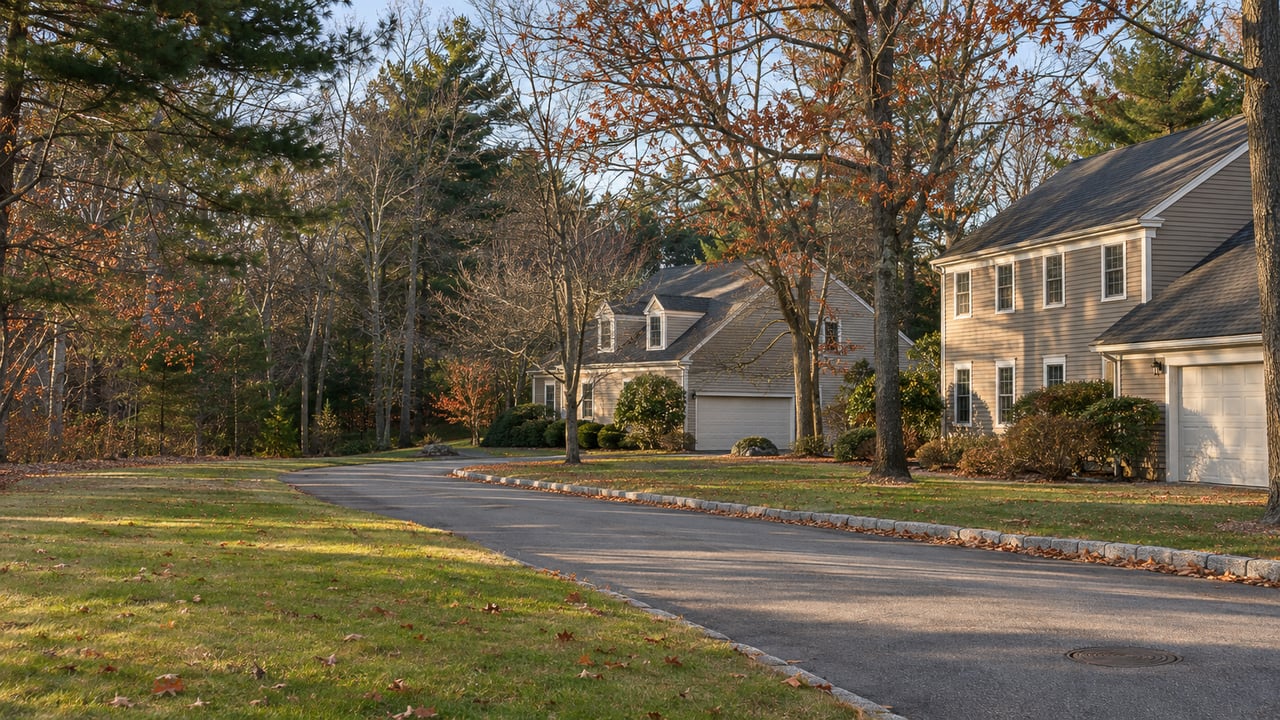
Sewer charges and septic maintenance are both costs a buyer may encounter in Merrimack.
The largest variable in Merrimack's sewer math is the new owner at 221 Daniel Webster Highway. At the September 10, 2026 Council meeting, Micali reported that United Therapeutics plans to relocate some of its business plans to Merrimack, with construction projects expected within the next few years. He credited Rep. Boyd with helping bring the company to town. NH Business Review reported that the company is expected to bring hundreds of high-paying jobs to the region, and noted that construction plans, designs, and a redevelopment timeline have not been disclosed.
In January, Micali described the budget as a placeholder for "not knowing what will be going into that facility." Whatever United Therapeutics builds will decide how much flow reaches the Mast Road plant from that parcel. Until then, the chemicals, the dosing equipment, and the roughly $1 million gap are costs Merrimack's sewer users carry.
Did the brewery closure raise Merrimack property taxes? The site was assessed at $35 million before the closure, and it now has a new private owner who paid $47.5 million, according to deed records cited by Boston.com. The parcel's property tax follows that owner. The sewer fees stopped when the brewing did.
Has Merrimack raised sewer rates because of the closure? As of the October 22, 2026 Council meeting, the town manager said he expects an increase will be necessary. The amount will be set through the upcoming budget process.
Where do sewer charges appear? On the property tax bill, billed twice a year, according to the town's Development Guide.
This post is general information, not legal, tax or financial advice. Please confirm the sewer status, connection requirements and costs for a specific property with the town and the right professionals.
At Pat Clancey Realty, we look at a Merrimack home's sewer or septic status, and what its tax bill is carrying, before anyone writes an offer. If you're comparing houses across town and want to know which ones are exposed to the next sewer budget, get a local market consultation and work with us.
Stay up to date on the latest real estate trends.



We pride ourselves in providing personalized solutions that bring our clients closer to their dream properties and enhance their long-term wealth.