Leave a Message

Thank you for your message. We will be in touch with you shortly.

Condo And Townhome Living In Londonderry NH

March 5, 2026

Looking for low-maintenance living with strong commuter access and a more approachable price point than a single-family home? In Londonderry, condos and townhomes offer exactly that, with a range of communities, floor plans and amenities that fit many stages of life. Whether you are buying your first place, downsizing or simplifying your weekly to-do list, you have solid options across town. In this guide, you’ll learn current price ranges, what HOA fees typically cover, common rules to expect, and how attached living compares to single-family homes in Londonderry. Let’s dive in.

Why Londonderry condos stand out

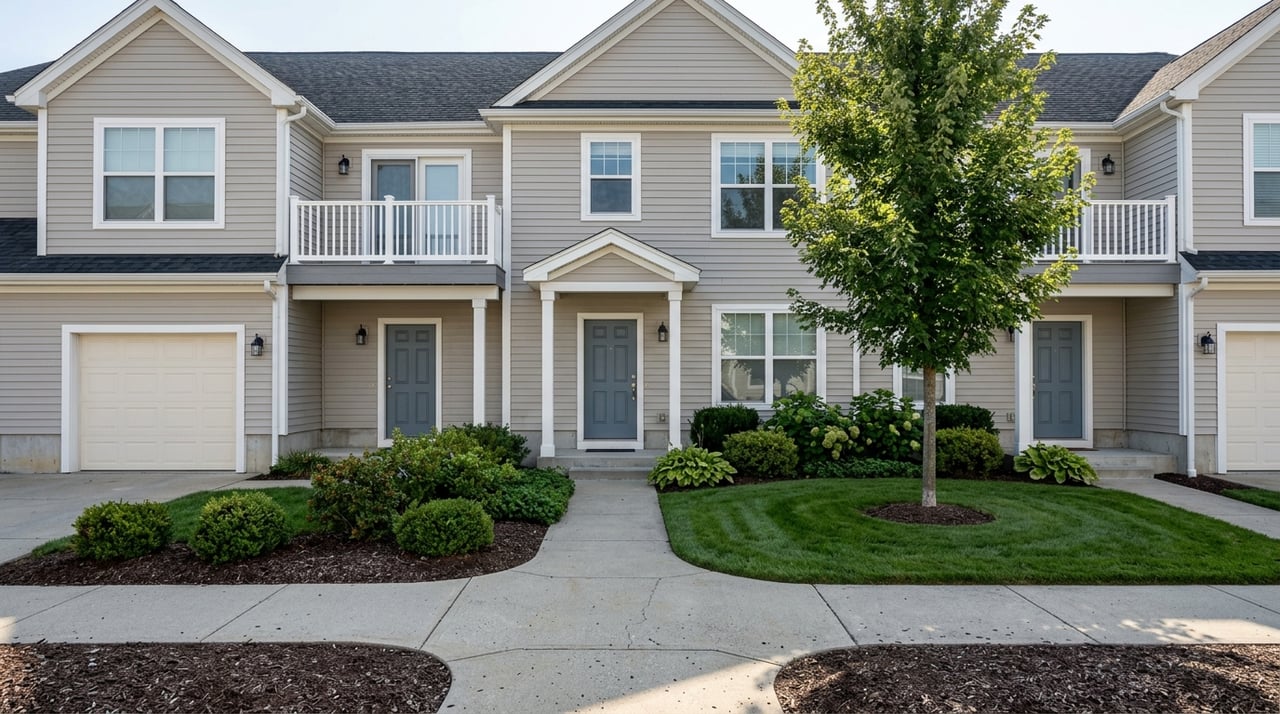
Recent snapshots show the median sale price for all homes in Londonderry around $570,000, while the median townhouse price trends closer to $365,000. Many older garden-style condos and classic townhouses list in the low to mid $200,000s through the mid $300,000s. Newer or larger townhome and duplex-style units often sell in the $350,000 to $575,000 range, with select low-maintenance duplex or detached offerings marketed higher in recent years.

That spread is the main reason many buyers choose an attached home. You often get modern systems, efficient layouts and exterior maintenance handled by the association, all while staying close to everyday needs and major routes.

Location and commute

Londonderry sits right off I-93 near Exits 4 and 5 and is known for easy access to Manchester and Greater Boston. The drive to Boston is roughly 40 to 45 miles, with typical drive times of about 50 to 75 minutes depending on traffic, according to driving distance estimates. You’re also a short drive to Manchester-Boston Regional Airport. Many condo communities are intentionally placed near the North Londonderry park-and-ride, which is helpful if you use regional bus service.

What you get for the price

  • Garden-style condos commonly run about 850 to 1,150 square feet with one to two bedrooms.
  • Traditional townhomes often offer 1,100 to 1,800-plus square feet.
  • Larger end-unit and three-level townhomes with garages can reach roughly 2,000 to 2,400 square feet in local resale examples.

If you prefer elevators and single-level layouts, look for garden-style buildings. If you like defined living zones, extra storage and a bit more privacy, multi-level townhomes and end units are worth a look.

Popular condo and townhome communities

Here are a few Londonderry spots you’ll see often in listings. Exact availability changes week to week, but these examples give you a feel for amenities and styles.

  • Century Village. A large, established complex known for its clubhouse, in-ground pool, athletic courts and walking trails. It has a long track record of resale activity across different floor plans, which helps with long-term liquidity. Learn more about the community’s amenities on the Century Village page.

  • Vista Ridge. Garden-style buildings, including some elevator-served blocks, close to Exit 5 and the park-and-ride. Units here often trade in the low to mid $300,000s and are popular with commuters who want easy highway access.

  • Kendallwood. An older townhouse neighborhood with a pool and playground. Many resale examples in recent years have landed in the $250,000 to $350,000 range, appealing to first-time buyers.

  • Woodland Village. A garden-style community with varied unit sizes and a mix of association fee structures. Some buildings include certain utilities in the dues, so always confirm what your specific unit’s fee covers.

  • Cohas Landing (55+). An age-restricted, low-maintenance option for downsizers who want simplified living in Londonderry. You can review community highlights and typical 55+ occupancy rules on the Cohas Landing overview.

HOA fees explained

Most Londonderry condo associations charge monthly dues in the $200 to $450 range, depending on the community’s services and amenities. Fees typically cover exterior common-area maintenance, landscaping, snow removal, trash, common-area insurance and amenity upkeep. Some associations also include building exterior insurance or certain utilities like water or hot water. Always confirm what your fee includes in the association documents for your specific unit.

Dues are usually billed monthly, and associations can levy special assessments for major projects if reserves are low. Reviewing the budget, reserve study and recent meeting minutes helps you understand assessment risk. For a clear overview of what to ask for, see this practical guide to reviewing HOA documents and red flags.

Rules you should expect

Condominiums in New Hampshire are governed by the New Hampshire Condominium Act, which outlines association powers, unit boundaries and governance. If you are buying, request the recorded declaration and bylaws early so you understand the rules and your responsibilities. You can read the statute text in the New Hampshire Condominium Act (RSA 356-B).

Common rules in local associations include:

  • Pet policies. Some communities allow pets with limits or board approval. Others have size or number restrictions. Policies vary by association.
  • Age restrictions. Select communities are 55+ and use occupancy rules that you must follow. Review the community’s recorded documents for specifics.
  • Leasing rules. Many declarations limit short-term rentals or cap investor percentages. If you plan to rent the unit at any point, verify the policy in writing before you buy.

Financing and insurance basics

  • FHA/VA approvals. Many condo projects are not pre-approved for FHA or VA. If you plan to use those loans, ask your lender to check the HUD condo list and discuss whether single-unit approvals are possible for that project. Conventional financing is widely used, but lenders still review each association’s eligibility.
  • Project eligibility. Lenders often require a condo questionnaire and review the project’s owner-occupancy, reserves, litigation and building condition. These factors can influence your loan options. For a sense of the criteria lenders consider, see this Fannie Mae project eligibility commentary.
  • Owner insurance (HO-6). You will need an HO-6 policy that covers your unit interior, personal property, liability and potential loss-assessment exposure. Coverage limits depend on the association’s master policy and deductibles. Learn the basics of HO-6 coverage from this condo insurance overview, then tailor your policy after you read the master policy declarations.

Condo vs. single-family in Londonderry

  • Cost. Attached living usually starts lower than the typical single-family price in town. Weigh condo dues against what you would spend on yard care, exterior repairs and reserves for a house.
  • Maintenance. With condos, the association handles exterior work and shared areas, which cuts down your weekend list. A single-family home gives you full control and usually more private outdoor space, but it comes with more upkeep.
  • Space and privacy. Townhomes and duplexes can deliver generous square footage and sometimes a garage, but you will have closer neighbor proximity. End units and larger models feel more private.
  • Resale stability. Well-managed associations with healthy reserves, clear rules and good commuter access typically see steady demand. Associations with weak funding or active litigation can be harder to finance and resell. If you want a refresher on how to spot red flags, revisit the HOA document review checklist.
  • Commuting. Londonderry’s location on I-93 and proximity to the park-and-ride make condos especially attractive to Manchester and Boston commuters. For context, see the drive distance to Boston.

Property tax notes

Londonderry posts its annual tax rate on the town website and is conducting a 2025 revaluation. Your tax estimate will depend on the assessed value and the final rate after revaluation. For current information, check the town’s Tax Rates and Equalization page.

Who is a good fit for condo or townhome living

  • First-time buyers. You get a lower entry price and fewer exterior maintenance surprises. If you need an FHA or VA loan, ask your lender to verify the project’s approval status early.
  • Downsizers. If you want fewer chores and social amenities, look at age-restricted or amenity-rich communities. Explore details for 55+ options like Cohas Landing and confirm guest and occupancy rules.
  • Commuters. If proximity to Exit 4 or 5 and the park-and-ride matters, prioritize communities near I-93.
  • Investors. Proceed carefully. Verify leasing rules, rental caps, owner-occupancy ratios and any limits on short-term rentals in the recorded documents. The HOA documents checklist outlines what to request.

Buyer due-diligence checklist

Ask for these documents during your contingency period and review them with your agent and lender:

  • Recorded declaration, bylaws and rules. Start with the New Hampshire Condominium Act for definitions.
  • Current operating budget and most recent financial statements.
  • Latest reserve study and current reserve balance, including percent funded.
  • Board and member meeting minutes for the last 12 to 24 months.
  • Resale or estoppel certificate showing dues, assessments and any owner arrears.
  • Master insurance declarations and deductible information. Use this condo insurance guide to frame the right questions.
  • Written leasing policy, owner-occupancy and delinquency figures, and any pending litigation.

How Pat Clancey Realty can help

Choosing the right community in Londonderry comes down to the details: commute needs, budget, floor plan, amenities and the health of the association. Our team brings decades of Southern New Hampshire experience and a steady, hands-on approach to help you compare options, read the fine print and move forward with confidence.

If you want a tailored short list of Londonderry condo and townhome communities that fit your goals, reach out to Pat Clancey Realty. We will walk you through current inventory, HOA documents and financing paths so you can choose with clarity.

FAQs

What are typical condo prices in Londonderry, NH?

  • Many garden-style and older townhomes list in the low to mid $200,000s through the mid $300,000s, while larger or newer townhomes often range from about $350,000 to $575,000.

What do HOA fees usually cover in Londonderry condo communities?

  • Dues often include common-area upkeep, landscaping, snow removal, trash, common insurance and amenities; some associations include certain utilities, so always confirm in the documents.

Are Londonderry condos FHA or VA approved?

  • Some are, many are not; ask your lender to check the HUD condo list and discuss single-unit approval options early if you plan to use FHA or VA financing.

What rules should I expect when buying a Londonderry condo?

  • Expect recorded rules on pets, leasing and community standards under the New Hampshire Condominium Act; review the declaration, bylaws and recent meeting minutes before you commit.

How do condo and townhome commutes compare to single-family neighborhoods in Londonderry?

  • Many condo communities sit near I-93 and the park-and-ride, offering efficient access to Manchester and Boston, with a drive to Boston of roughly 40 to 45 miles.

How are property taxes calculated for a Londonderry condo?

  • Taxes are based on the town-assessed value and the posted rate, which can change with revaluation; check the town’s tax page for the latest rate and assessment updates.

Work With Us

We pride ourselves in providing personalized solutions that bring our clients closer to their dream properties and enhance their long-term wealth.