Amherst vs Hollis NH: Choosing the Right Quiet Town
April 23, 2026
April 23, 2026
Trying to choose between Amherst and Hollis for a quieter lifestyle? You are not alone. Many buyers looking in Southern New Hampshire narrow their search to these two towns because both offer space, a slower pace, and a more residential feel than busier nearby areas. The challenge is that “quiet” can mean different things depending on what matters most to you. This guide will help you compare Amherst and Hollis based on land use, housing patterns, commuting, taxes, and day-to-day feel so you can decide which town better fits your goals. Let’s dive in.
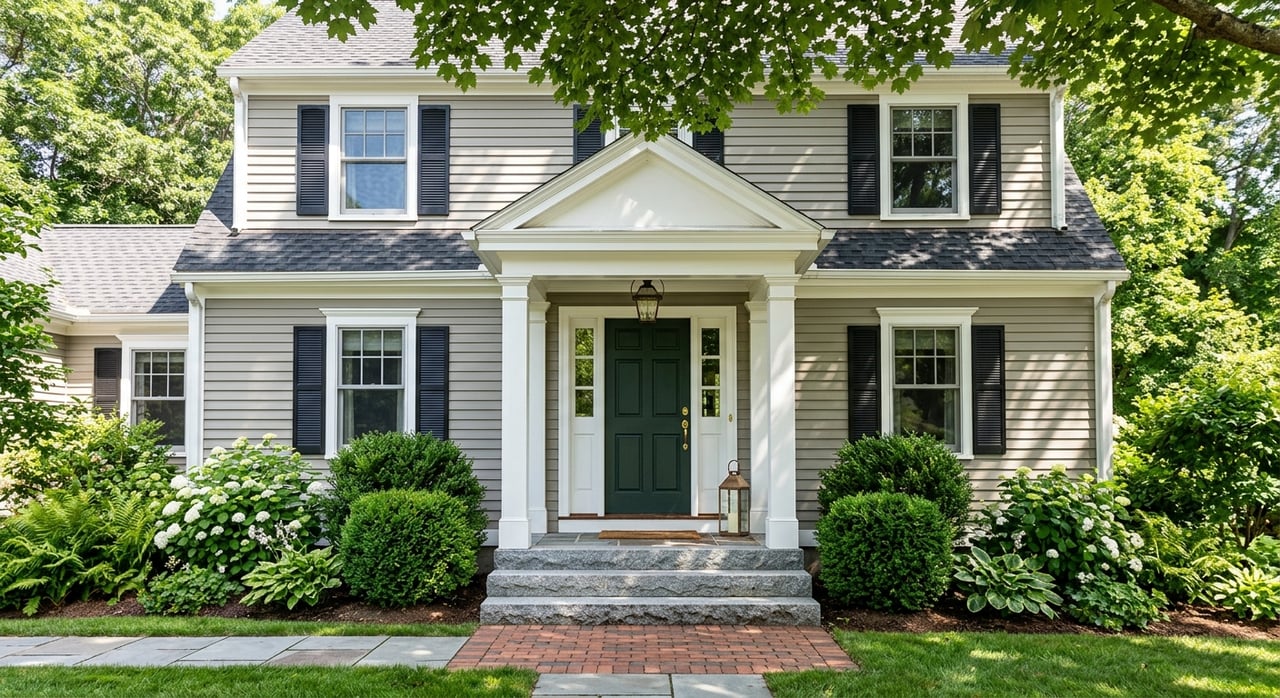
Amherst and Hollis are both low-density towns in Hillsborough County, but they are not identical. Amherst describes itself as a growing suburban-rural community with historic and rural characteristics, along with a business district near Route 101A and a village green that hosts town events, according to the Town of Amherst.
Hollis is smaller and less dense. Census QuickFacts show Amherst has 11,914 residents across 33.91 square miles, while Hollis has 8,746 residents across 31.73 square miles. Hollis also notes that about half of its land is in agricultural use, which helps preserve its rural character, according to the Hollis Agricultural Commission.
If you want the shortest summary possible, Amherst tends to offer a blend of quiet living and convenience, while Hollis leans more consistently rural and open.
If quiet to you means fewer people and a little more breathing room, density matters. Amherst has about 346.6 people per square mile, while Hollis has about 262.9 people per square mile, based on Census QuickFacts.
That difference may not sound huge on paper, but it can shape how a town feels as you drive through it. Hollis is generally the less dense of the two, which supports the sense of a more spread-out setting.
One of the biggest differences between Amherst and Hollis is how land is used and how homes are spaced.
Amherst has more variety in its zoning. The town’s zoning ordinance shows minimum lot sizes of 2 acres in the Residential/Rural zone, 3.5 acres in the Northern Transitional zone, and 5 acres in the Northern Rural zone. For reduced-frontage lots, those minimums increase to 5, 7, and 10 acres in the same districts, according to the Amherst zoning ordinance.
In practical terms, Amherst can give you several different housing settings. Some areas feel more traditionally neighborhood-based, while others offer larger parcels and more separation between homes.
Hollis is more uniformly large-lot in its low-density districts. The 2026 ordinance shows 2 acres per dwelling unit in multiple zones, including Agricultural, Residential & Agricultural, Rural Lands, Town Center, Recreation, and Water Supply Conservation. It also lists 4-acre backland lots and 200 feet of frontage, according to the Hollis zoning ordinance.
For many buyers, that means Hollis delivers a more consistent large-lot pattern across town. If your idea of quiet includes more acreage, wider buffers, and fewer subdivision-style layouts, Hollis will often be the stronger match.
Quiet is not just about lot lines. It is also about what the town feels like when you live there.
Amherst offers a mix of historic character, residential areas, and easier access to services. The town highlights its village green, local events, and commercial growth near Route 101A on its community page. That combination gives Amherst a balanced identity.
You may prefer Amherst if you want a quieter town without feeling too far removed from shopping, local errands, and a more active town center. It still offers many peaceful residential areas, but the overall pattern is more mixed.
Hollis has a stronger agricultural and open-space identity. The Hollis Agricultural Commission says farming remains central to town life, fields line the roads, and about half the town’s land area is in agricultural use.
That creates a more consistently rural impression. If you picture scenic roads, open land, and a town where rural character stands out almost everywhere, Hollis may feel more in line with what you want.
If school structure matters to your home search, the two towns are organized differently.
Amherst is part of SAU 39. Amherst and Mont Vernon provide their own elementary schools, and students then share Amherst Middle School and Souhegan High School. SAU 39 projects 1,269 K-8 students for the 2025-26 school year.
Hollis operates grades K-6 locally, while grades 7-12 are part of the Hollis/Brookline Cooperative District through SAU 41. The district includes Hollis Primary School, Hollis Upper Elementary School, Hollis Brookline Middle School, and Hollis Brookline High School, according to the Town of Hollis community profile and SAU 41 district information.
This is less about one being better and more about understanding the system that fits your household. If you are comparing specific homes, it is smart to confirm current school assignment details as part of your search.
Your version of quiet may still need to work with your daily drive.
Amherst has a more direct corridor story. The town says Routes 101 and 101A pass through Amherst and connect to US Route 3 and Interstate 93. It also notes that Manchester and Nashua are both less than 15 miles from downtown Amherst, according to the Town of Amherst.
Hollis depends more on a local-road network. Its transportation planning references NH 101A at the northern tip of town, along with Routes 111, 111A, 122, and 130 as secondary state highways, according to Hollis town planning information cited in the research report.
That said, average travel times tell an interesting story. Census QuickFacts show a mean travel time to work of 32.5 minutes in Amherst and 27.2 minutes in Hollis. This is only an average and not a promise for any specific commute, but it does show that Hollis residents report a shorter average drive to work.
Budget matters, especially when you are comparing two towns that can both feel desirable for buyers seeking space and privacy.
The latest posted 2025 property tax rate is $23.98 per $1,000 in Amherst and $18.90 per $1,000 in Hollis, according to Amherst’s tax rate history page. On a $500,000 assessed home, that works out to about $11,990 in Amherst and $9,450 in Hollis before exemptions or credits.
But tax rate alone does not tell the whole story. Census QuickFacts place median owner-occupied home value at $537,600 in Amherst and $675,900 in Hollis. Using those median values, the rough tax bill comes out fairly close at about $12,892 in Amherst and $12,775 in Hollis.
In other words, Hollis has a lower tax rate, but also a higher typical home value. Amherst may offer a somewhat lower entry point for buyers, while Hollis may require a higher upfront purchase budget.
The right choice depends on what you mean by quiet.
If you are torn between Amherst and Hollis, the best next step is to compare actual listings through the lens of your daily life. Think about how much land you want, how important nearby services are, what your commute looks like, and what price range feels comfortable.
It also helps to spend time driving both towns at different times of day. A town can look right on paper and still feel different once you experience the roads, spacing, and overall pace for yourself.
If you are weighing Amherst versus Hollis and want clear, local guidance based on your budget and goals, Pat Clancey Realty can help you compare the options and narrow your search with confidence.
Stay up to date on the latest real estate trends.
We pride ourselves in providing personalized solutions that bring our clients closer to their dream properties and enhance their long-term wealth.